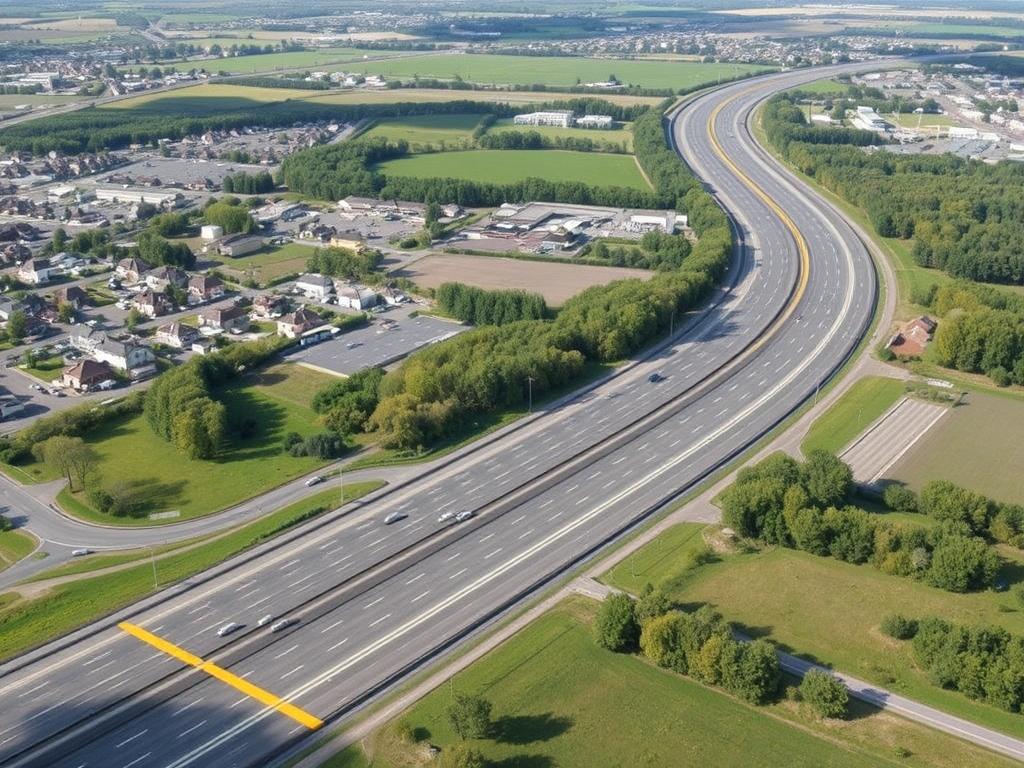
The A1 motorway Cyprus is a critical artery connecting Limassol and Nicosia, two of the island’s key economic and population centers. As one of the busiest highways in the country, the motorway supports not only daily commuting but also the flow of goods and services essential for Cyprus’s ongoing development. Recently, plans and implementations for upgrading the A1 motorway have created ripples in the real estate market and the broader economic landscape along this corridor. The upgrade promises to enhance traffic efficiency, safety, and connectivity, which naturally raises questions about how such infrastructure impact property, particularly in terms of land prices Limassol-Nicosia.
This comprehensive examination dives deeply into how infrastructure projects like the A1 motorway upgrade affect land values and real estate near the highway, guiding investors and property owners alike about the potential and risks involved. Understanding these dynamics is essential for anyone looking to invest along A1 or simply track economic changes in Cyprus’s heartland.
The Strategic Importance of the A1 Motorway in Cyprus
The A1 motorway Cyprus represents more than a transportation route; it is the spine of economic integration between the southern coastal city of Limassol and the inland capital, Nicosia. This route plays a pivotal role in facilitating commerce, tourism, logistics, and daily life for thousands of Cypriots every day. Improvements to this highway reflect the government’s priority to sustain and stimulate growth through better infrastructure.
Historically, the initial construction of the A1 motorway already set a precedent for how roads can transform regions. It reduced travel time significantly, promoted regional trade, and attracted investments in industries ranging from manufacturing to tech startups. Today, the upgrade focuses on expanding lanes, improving road safety measures, and integrating smart roadway technology, all factors expected to alter the landscape of real estate dramatically.
The A1 motorway acts as a catalyst for economic and real estate development, making its upgrade pivotal for long-term growth.
Connectivity and Economic Integration
The enhanced connectivity between Limassol and Nicosia will reduce transportation costs and delivery times, enhancing Cyprus’s international competitiveness. Improved infrastructure typically leads to higher productivity. For industries reliant on frequent transport—such as manufacturing, wholesale trade, and tourism amenities—this upgrade is a game changer.
This improved integration inevitably brings a ripple effect to land and property markets near the highway. Areas once considered peripheral now become more attractive due to easier access to urban amenities and markets. Enhanced transport links often lead to suburban expansion and decentralized commercial investments, pushing demand for land and property outward from the city centers.
Infrastructure Impact Property: Mechanisms Driving Land Price Changes
When a major infrastructure project like the A1 motorway upgrade is undertaken, it exerts what urban economists call an “infrastructure impact property” effect. This dynamic is complex, operating through multiple pathways to influence land prices along the affected route.
Initially, improved roads increase accessibility. This is critical because land value largely depends on how easy it is to reach amenities, employment centers, and services. As access improves, so does the desirability of properties in the vicinity. Additionally, upgraded infrastructure can reduce hazardous traffic conditions and noise, elevating residential satisfaction and investment confidence.
Alongside accessibility, upgrades often trigger anticipatory demand. Investors looking to capitalize on potential growth start acquiring land before prices surge. The psychological and speculative aspects of infrastructure impact property often lead to preemptive spikes in land prices.
However, not all land benefits equally. The magnitude of price changes depends on factors such as proximity to highway exits, existing urban density, zoning regulations, and local economic trends. Some parcels may appreciate significantly, while others might see minimal impact or even depreciation if the infrastructure causes negative externalities like increased noise or pollution.
Improved accessibility and investor anticipation combine to drive land price fluctuations along highway upgrades.
Types of Properties Most Affected
Real estate near highway infrastructure upgrades usually falls into three broad categories: residential, commercial, and industrial. Each type responds differently to the A1 motorway upgrade.
Residential Properties tend to experience mixed outcomes. Properties located slightly removed from the busiest road segments usually see appreciation due to improved commuting options and safety. However, homes directly adjacent to noisy or congested areas may experience stagnating or falling values.
Commercial Properties</strong—such as retail outlets, office parks, and service stations—often experience the highest gains. They thrive on the increased traffic volume and better logistics environments the upgraded motorway provides. Shopping centers or business hubs near newly upgraded junctions often become preferred locations for expanding businesses.
Industrial Land</strong, particularly near transport hubs, may see marked increases. Manufacturing firms and logistics companies value proximity to efficient transportation for raw material input and product distribution. With the A1 motorway upgrade, industrial zones along the corridor may witness heightened demand and rising land prices.
Land Prices Limassol-Nicosia: Recent Trends and Analysis
The corridor between Limassol and Nicosia offers a unique microcosm for studying how land prices respond to transport infrastructure improvements. This region combines urban centers, suburban zones, and rural land, each reacting differently to the upgrade of the A1 motorway Cyprus.
Recent data collected from government land registries, real estate agencies, and independent surveys indicate a consistent upward trajectory in land prices along the route, particularly in areas close to key interchanges. The most notable increases are concentrated in peri-urban zones where previously undeveloped or agricultural land is rapidly converting to residential or mixed-use projects.
The graph of land prices Limassol-Nicosia over the last five years confirms two clear spikes coinciding with phases of highway improvement announcements and construction milestones. Buyers and developers anticipate the final unveiling of the upgrades and are moving quickly to secure strategic parcels.
| Location Segment | Average Land Price Increase (5 Years) | Dominant Land Use | Primary Driver of Price Change |
|---|---|---|---|
| Limassol Suburbs | 25% | Residential | Improved commuting and urban spillover |
| Midway Area (Mamidou to Zygi) | 40% | Mixed-use development | Strategic accessibility via new exits |
| Nicosia Outskirts | 30% | Industrial and commercial | Logistics hub expansion |
Developers report an increased interest in land parcels near the newly constructed interchanges, with demand driven not only by local buyers but also foreign investors viewing Cyprus’s improved infrastructure as a safeguard for future growth. Consequently, the nexus of demand and supply restrictions has intensified price pressure in these areas.
Real Estate Near Highway: Investment Perspectives
Investing along A1 can be lucrative but requires nuanced understanding. Real estate near highway improvements may provide above-average returns due to enhanced access and subsequent commercial activity. Yet, investors must carefully evaluate location characteristics, zoning constraints, and environmental considerations before committing capital.
Key factors influencing investment outcomes include proximity to highway entrances and exits, planned urban development zones, and existing infrastructure supporting utilities and services. Properties in well-planned zones with excellent road connectivity and amenities tend to appreciate faster and are easier to lease or resell.
Apart from direct investment in land or buildings, there are also opportunities in related infrastructure projects such as service stations, logistics centers, and retail developments that capitalize on increased traffic volumes facilitated by the upgraded A1 motorway Cyprus.
Investing near the A1 motorway upgrade demands a strategic analysis of location-specific factors and long-term regional development plans.
Risks and Challenges for Investors
Despite the evident advantages, real estate investment along major highway corridors carries risks. These include possible delays or changes in infrastructure plans, overvaluation spurred by speculative buying, and potential negative externalities such as noise pollution or congestion setbacks. Government policies and macroeconomic conditions also heavily influence the stability and profitability of investments.
Moreover, investors should be aware of regulatory hurdles including zoning restrictions limiting certain development types or mandatory compliance with environmental impact assessments. These factors underscore the importance of thorough due diligence and engaging local experts when considering investments along A1.
Planning for the Future: Long-Term Outlook for Land Values Along the A1
Looking ahead, the upgraded A1 motorway Cyprus is likely to continue shaping land prices Limassol-Nicosia in fundamental ways. As urban areas expand and regional economies integrate further, demand for accessible land will intensify, potentially accelerating suburbanization and industrial diversification.
Future government projects related to zoning reforms, public transportation expansions connecting with the motorway, and technological innovations in traffic management are expected to further enhance property values. Combined with Cyprus’s growing role as a Mediterranean business hub, these dynamics suggest a favorable environment for smart, long-term investors along the A1 corridor.
Environmental sustainability will also become more prominent in planning decisions, potentially influencing how land uses evolve. Incorporating green infrastructure and mitigating adverse impacts will be critical for maintaining livability and property desirability near the highway.
Long-term land value growth along the A1 corridor depends on coordinated urban planning and sustainable infrastructure development.
Policy Implications and Recommendations
To maximize benefits from the A1 motorway upgrade, policymakers should prioritize integrated land use and transport planning. Coordinated strategies can ensure that rising land prices do not marginalize certain communities and that development remains inclusive. Incentives for mixed-use development, affordable housing, and environmental protections must accompany infrastructure investments to create balanced growth.
For investors and developers, staying informed about evolving government regulations, infrastructure phases, and regional economic trends will be key to navigating this complex landscape successfully. Building partnerships with local authorities and communities can facilitate smoother project implementation and better investment outcomes.
Unlocking Potential: Why the A1 Motorway Upgrade Matters for Land Prices
The upgrade of the A1 motorway Cyprus marks more than an improvement to a road—it’s a transformation in how space, economy, and opportunity intersect between Limassol and Nicosia. The resulting changes rippling through land prices Limassol-Nicosia epitomize the powerful influence of infrastructure impact property on real-world economic landscapes.
While challenges remain in balancing growth with sustainability and community needs, the upgraded motorway creates new possibilities for residents, businesses, and investors. Smart investments alongside the highway—guided by comprehensive analysis and realistic expectations—promise rewarding returns and contribute to shaping the future of Cyprus.
Understanding the unique dynamics at play in real estate near highway corridors like the A1 helps stakeholders anticipate trends, mitigate risks, and seize opportunities that come with infrastructural modernization. Whether you are an investor looking to invest along A1 or a policymaker focusing on regional development, appreciating the intricate linkage between transportation upgrades and land prices is essential.
The A1 motorway upgrade is a catalyst, setting the stage for accelerated land value growth and regional prosperity along Cyprus’s principal economic corridor.
Frequently Asked Questions
- How does the A1 motorway upgrade affect land prices near Limassol and Nicosia?
The upgrade improves accessibility and connectivity, leading to increased demand and rising land prices particularly near key junctions and suburban areas. - What types of properties benefit most from infrastructure upgrades like the A1 project?
Commercial and industrial properties close to highway exits generally see the highest price increases, while residential properties experience mixed impacts depending on proximity to noise and congestion. - Is investing along the A1 motorway considered a safe long-term investment?
Yes, with proper due diligence. The A1’s strategic importance and ongoing upgrades make it attractive, but investors must consider regulatory risks and plan carefully. - What role do government policies play in shaping land prices along upgraded highways?
Policies related to zoning, environmental regulations, and infrastructure planning directly influence development potential and land value appreciation. - How soon after an infrastructure upgrade can land price changes be expected?
Some price changes occur during announcement phases due to speculation, but significant appreciation typically follows the project’s completion and increased usage. - Can infrastructure upgrades cause any negative effects on nearby properties?
Yes, increased noise, pollution, and traffic congestion can negatively affect properties located immediately adjacent to highways if mitigation measures are not implemented. - What factors should investors consider when deciding to invest along the A1 motorway?
Investors should assess location proximity to highway exits, zoning plans, existing infrastructure, local market trends, and environmental impact before investing.